Tuesday, 31 May 2016

The Best Insulin Pump - The One You Use

I wrote about the best Insulin Pump a few years back. My view hasn't changed much, so, Summer Rerun. 

So here what I said in 2012

The question which is the 'best' insulin pump floats up in diabetes conversation regularly. Best is a natural but probably the wrong question.

The quality of pumps and their ability to perform the basic insulin delivery functions is so good that these days users and their care teams have the potential to define the device and vendor that most appropriately fits a person's unique lifestyle. That is a real wordy way of saying, ‘there is no best pump.’

Happily one size does not fit all.

People with diabetes have different needs because their diabetes varies. So don't look for the absolute best pump but to the device that best accommodates your individual lifestyle. This dude may love his backpack,  but it may not be your best choice. (And what is in the giant bottle on the bottom of that thing anyway?)

Design and feature matter. For example the patch, folks seem to have a love/hate relationship with the OmniPod. That is great. If you are drawn to the patch pump, no tubing, PDA driven approach -great. If like my kids. You think it is too big and uncomfortable and tube are okay a more traditional pump may be better in your life. There are a lot of criteria individuals can consider. Remotes are really great for little kids. Lock the pump down and have mom or dad operate it with a remote control. How much insulin do you use and how much does it hold. Is it a color a young girl is comfortable wearing 24/7.

CGM may matter. If CGM integration is mission critical only Medtronic has int on the market in the USA. Animas, Roche, OmniPod, and Tandem are in the on-deck circle with Dexcom. Remember that deck circle is a baseball term. There is no clock in baseball and Animas, and Omni pod have been next in the line up for years waiting to come to bat. Some of the fans in the stands are getting rowdy and jeering the Ump wanting to see them come to bat. Food databases are touted as a key feature. If they are to your look carefully at the implementation and ease of building realistic meals. Can you customize the food database to your needs.

Service matters. Check it out by calling the service in the middle of the visit by the sales team. Like everything else service varies. We have had great service from Animas other say they have had issues. Read up on TuDiabetes and CWD and keep in mind that when the device is as integral a part of life as an insulin pump, individual service expectations will be very high.

Sets matter. People talk about pump features, but the set and how it feels going in are where the rubber meets the road. -  Well, the insulin meets the subcutaneous tissue. Try on sets as part of the sales process. Sets plural, not set.

Instead of which is best maybe the question should be what features best adapt to my lifestyle. That the art and science of insulin pumping have progressed from that backpack size prototype, in the black and white pictures above, to diverse, miniature devices is great.

What is best is we get to choose based on our individual preference.


Related posts from the YDMV archives:
Why Pump
What would be Really Cool.

Updated with some grammar & spelling fixed 5/31/16. Sure there are still a ton of errors. My Writing May Vary

Saturday, 7 May 2016

Normal service will be resumed as soon as possible

Apologies for the interruption - the fluffy four-footed addition to our household has made finding time for blogging very difficult in recent months. Which is unfortunate really, because I have at least three or four posts waiting in the wings that I would really like to put together!

We picked up our young Clumberdoodle pup at the beginning of April and time has absolutely flown by since. For a couple of months before Marvin's arrival we were busily DIYing and generally attempting to puppy-proof (ha!) the house and garden a little. It's all been a bit of a blur to be honest and reminded Jane and I of a heady combination of those weeks with a newborn babe, mixed in with a good dollop of toddler mischief and a hint of teenage experimentation and boundary-pushing. Fortunately Marvin is a dog who likes a nap, and can be persuaded to do pretty much anything for the promise of a bit of chicken or nibble of Schmacko.

Around the middle of March I was chuffed to be invited by the wonderful Dr May Ng to speak at the North West Children and Young People's Network Education Day - if you'd like to get a glimpse of what went on I put together a Storify of the tweets. Alternatively, everyone's favourite Diabetes Dad, Kev Winchcombe wrote a great, but altogether far too modest blog post about the day. His talk was far more packed with laughs and interesting detail about diagnosis, transition, DIY APS and Nightscout than my blathering about spurious similarities between daily management of type 1 diabetes and Scalextric!

In the coming months I am really hoping to post a follow up to my reflections on DPC2016 detailing what I picked up from Iain Cranston's fantastic presentation on interpreting CGM data and Ambulatory Glucose Profile reports.

Additionally I have seen a number of conflicting reports/research about cholesterol and Statins in recent weeks and I'd really like to post something about that - if only to be able to process it a little myself.

Thirdly, I am honoured to have been invited by Abbott to attend an event in Stockholm in June called 'Dx' which looks to be really very interesting indeed.

Lastly I have been quietly working with a few other DOC legends (quite how I managed to scrape into their hallowed company is beyond me) on something I am only half-jokingly calling "Project Enormous". We hope that soon - perhaps in the next month or two - it will reach the point where we can release it into the wild and see if it has any 'legs', and lives up to the promise of the idea.

Exciting times.

Hope your BGs play fair in the meantime and thanks, as ever, for reading.

Disclaimer. For my attendance at the North West Diabetes Network Education Day my travel and accommodation expenses were generously paid, but no speaker's fees were offered or received.

Thursday, 5 May 2016

You Diabetes May Vary So Access Matters (Wherein I borrow from Manny & Scott)


Diabetes is complex.

It is highly dependent on patient self-care actions that include daily self-monitoring of blood glucose, medication and dosing adjustments, diet measurement, carb management, physical activity, and logistic management of all the stuff needed to do all of the above. Diabetes has a well-documented comorbidity of clinical depression and a subclinical level emotional exhaustion from the burden of management. Diabetes is complex.

Whoever manages it, needs tools they can work with.

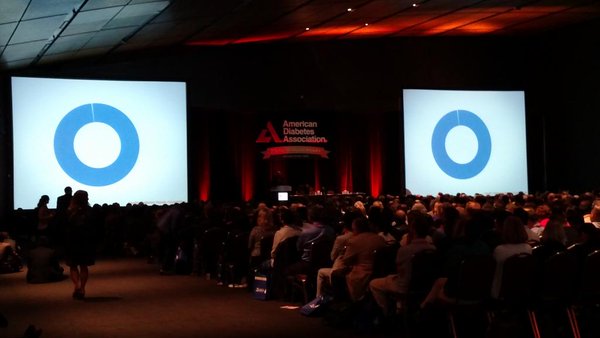
My dear friend Manny Hernandez has a spectacular visual representation of the time patients self-manage. A chart that shows the percentage of time people with diabetes self-manage vs the time we spend with our physicians, diabetes educators, and care teams. It is below.

See that little white line? That is time with the care team. BUT to make the little white sliver visible, Manny had to exaggerate its proportion of the graph. This is not to minimize the role of our professional care teams but to make it visible. Manny is not alone in making the point of the importance of patient self-care. Here is Manny’s chart, presented by renown endocrinologist Dr. David Marrero at the ADA Scientific Session in 2015. In the image, we see one diabetes doctor talking with a huge room full of other diabetes doctors making the point that respecting the role of patients is critical to success.


Image source Diabetes Mine - Twitter

Let just pause and think about what this image represents: a doctors and a patient collaborating to advance the art and science of diabetes care at the ADA Scientific Sessions.

I think that patients and doctors collaborating is a brilliant model. 

All the diabetes complexity outlined in the opening paragraph, along with all the associated variability is self-managed the vast majority of the time by patients guided with a small but critical sliver appointments with their health professionals. Somehow in that little white space, doctors and patients figure out jointly how to make the time represented by the blue space successful.

All this is a very long way of starting to making a case for asking, "Who knows best what will drive success in the all the blue time on Manny’s chart?"

To put it briefly, again, I turn to a friend:
"My initial reaction is that healthcare decisions, such as which insulin pump to use, should not be made outside of the doctor/patient relationship," - Scott Johnson
We have seen that disruption to access to testing supplies in an attempt to reduce supply costs, resulted in increased hospitalization, costs, and mortality.

Diabetes is complex. It is highly dependent on patient self-care.

There are 30 million or so people with diabetes in the US. It is a safe bet we have different approaches to succeeding in the blue space on Manny’s chart. Long-term diabetes costs are contained by what happens in that blue space. 

The best practice is individualized diabetes care programs. The appropriate device may vary.

You Diabetes May Vary - So Will Your Care Program and Your Diabetes Stuff. 

Access matters for long-term success. 


http://diabetespac.org/access-matters/


Related (and ancient) YDMV  Content:


Thursday, 10 March 2016

Your Diabetes May Vary (again!) - BG variation after food

Two different carbohydrates, yesterday. (CC)
Which would hit your bloodstream faster, a banana or a biscuit? Pure glucose or a slice of white bread?

Well, in news that will come as a bit of a shock to some (and not at all to others), you can't actually know without checking for yourself.

Anyone with diabetes who has spent much time monitoring blood glucose levels before and after meals (especially if they have then compared their results with anyone else), may well already be familiar with this conversation: Person A: "I find porridge is great in the morning, it releases really steadily until lunchtime"
Person B: "Really?!? I can't go near porridge - it hits me like a train. All breakfast cereal does. Which is odd really, because Mars bars cause me no BG problems at all" etc etc. Rinse. Repeat.

Well a recent study published in 'Cell' by the Weizmann Institute of Science has demonstrated once and for all what we pancreatically-challenged types have suspected for a long time. That blood glucose responses to different foods are infuriatingly and often bewilderingly individual.

The study took 800 people without diabetes, around 54% of them were overweight and 22% classified as obese (with a BMI of over 30 kg/m2). They were connected to a Continuous Glucose Monitor for a week at a time, but the CGM was 'blinded' so participants had no way of seeing what was happening to their levels. CGM consists of a small sensor placed under the skin which records interstitial glucose values every 5 minutes, 24 hours a day. These values generally lag behind true blood glucose values by 10 minutes or so, but give a complete picture of what is happening before and after food and during sleep. People in the study recorded their food intake, levels of activity and so on using a smartphone app. They followed their normal routine, and ate as they normally would with the exception of breakfast, where they were assigned one of 4 standardised meals containing 50g of carbohydrate.

If you have spent much time online, sharing experiences with people with diabetes you may get a nice warm fuzzy feeling of "Aha! I *knew* it!" at the results. Here are a few things that came out of the research that caught my eye:

Responses to different foods were highly individual. Many people's BG rose rapidly after a standardised glucose meal as you would expect, but others were relatively untroubled by pure glucose, while eating bread sent their BG levels through the roof.

A graph comparing two participants shows an almost exact inverse response between, for example, cookies and bananas. In the light of this, any lists of 'foods which release slowly' can only ever be viewed as a general guide. Your own response to any food could well be very different.

In general, people who had higher BG responses after eating carried more weight than those with lower responses. The paper doesn't offer any thoughts as to whether these higher BGs make people put on weight, or whether the excess weight causes the elevated post-meal BGs, but in either case this association did not just occur at the extreme ends, but as a continuous range across the various weights.

The highest post-meal responses 'significantly correlated' with elevated (but still non-diabetic) HbA1c, waking glucose level, BMI and also age - all known to be risk factors for developing Type 2 diabetes. It looks to me like these are people whose metabolisms are already beginning to struggle.

Perhaps unsurprisingly, post-meal responses were shown to be very different to the same foods if eaten after resting/sleeping vs after exercising. Apparently the Pope is also Catholic.

A 100 people took part in a further study which allowed the researchers to develop an algorithm that successfully predicted post-meal BG responses from a variety of clinical, physical and 'microbiome' (eg gut bacteria) factors. Personalised diets were then able to reduce post-meal BGs effectively. In the Diabetes Online Community we simply call this ‘eat to your meter’.

The scientists wonder if working directly on reducing post-meal BGs would, over time, reduce some of the other associated risk factors including reducing weight, HbA1c and lowering risk of fatty liver disease.

What do I think this means for me?
Well first of all, it helps me realise that it's not just me being 'weird' after all. Different people really do react differently to different foods. Sometimes in completely inexplicable ways. I spent almost 20 years eating things that had been recommended as 'slow release' before beginning to systematically test my own responses to foods and discovering a few surprises and several absolute shockers that I had always believed were 'pretty safe'.

In general, it is easy to see that the proportion of carbohydrate in a meal could have a fairly direct impact on post-meal BGs, but this research goes some way to explain many of those 'Huh??!?' moments, and demonstrates that there's a lot more to it than that for each individual.

People make a lot of noise over 'low carb' vs 'high carb', but in truth, those definitions are of little interest to me. What I'm after is a varied, enjoyable, sustainable, LOW BG SPIKE diet that suits *me*. This research encourages me to continue looking for it.

"Your Diabetes May Vary", and all that.

Sunday, 7 February 2016

Freestyle Libre - Going for the hat-trick?

Abbott have been able to announce a couple of really exciting bits of news in the last few weeks. Just in case you hadn't heard here they are...

Libre approved for use in children
The lovely Lesley Joseph from INPUT was attending ATTD 2016 (Advanced Technologies & Treatments for Diabetes) in Milan last week and was excited to share a glimpse of one of the presentations where Abbott announced that they had achieved a license for Libre in children. This was enthusiastically shared on social media along with another of the slides from the conference with some of the details from the study.

This is really good news for parents of children with diabetes who have been wanting to try the Libre as part of their diabetes management toolkit. It also reassures those who jumped in early before approval and used the Libre 'off license' for their children that they can now contact Abbott with a happy heart if they have any problems or need any advice.

Not to be outdone, Abbott themselves made an official announcement soon afterwards. Unsurprisingly choosing overnight testing as a particularly useful time to have a Libre in use. A lot less hassle to wave a reader through the duvet than to have to get a lancet out at 3am and rouse your slumbering child.

This welcome news came pretty hot on the heels of another long-awaited update in the story of the Libre...

No more waiting list
Following the launch of their new high volume production facility in January, Abbott have been able to clear the UK waiting list and the Libre can now be bought by anyone without having to wait. I heard about this a good few weeks back, but was a little cautious to mention it until I could actually see the results (we have been here before remember). However a week or so ago the news on TwitFace and other Social Bloggings was that, yes, the waiting list is no more. Hurrah!

At the same time, I had also heard from Abbott that they were beginning to roll out an official smartphone app that allows people who have a phone with an NFC chip to dispense with the reader and just use their phone to take Libre readings. I can't say much more than that as it has currently only launched in Sweden, but being able to ditch the separate meter certainly appeals to me. There are a couple of 'home spun' Android apps that attempt to do the same, but an official one from Abbott would reassure users that it has had to be put through all of the regulatory rigours of the handset itself. I will watch this one with interest (though I suspect as it stands no iPhone version will be possible because of the way Apple limits access to the iPhone 6's NFC chip).

I have not heard any more information about plans to launch either the Libre itself, or the app in more countries (though I know the UK is next on the list for app launch), but I have been promised a bit of a catch-up with Abbott in the near future and will keep you posted if I hear anything else.

The next big thing?
What would make this perfect for UK readers, of course, would be the announcement that the Libre was to become available on prescription via the NHS. Rumours and grapevine whisperings suggest that this might be tantalisingly close, but as yet remains elusive.

It seems there was much talk at ATTD about CGM (and other continuous monitoring options) and sensor-augmented pump therapy (Smartguard and other Artificial Pancreas dual or triple hormone technologies) so we will all be watching with interest.

If you hear any juicy gossip or rumours, do share them in the comments below.

Friday, 29 January 2016

Recall on Clinical Glucose Test Strips - Do Consumers Get The Same Attention?

FDA announced a recall of glucose test strip used in clinical settings. The recall in part says,"..because they may report falsely low blood glucose levels. Because the test strips are reporting falsely low blood glucose when the true levels are above 265 mg/dL, there is a risk that the health care provider would not diagnose hyperglycemia (high blood sugar) including Diabetic Ketoacidosis and Hyperosmolar Hyperglycemic Syndrome in a timely manner and fail to treat elevated blood glucose levels."

http://www.fda.gov/Safety/MedWatch/SafetyInformation/SafetyAlertsforHumanMedicalProducts/ucm483792.htm

So if you own a clinical machine, you should take precautions and check you test strip lots.

What we don't know is are the machines and strips used by millions every day working as approved. Who know? How would we know? Ther is no proactive, ongoing post-market process that acquires test strips the way PWD do; you know from retail channels and test them.

The vast majority of comments to FDA on the proposed glucose meter guidance in 2014 called for robust post-market processes. Procedures have been written but when will they be used?

People living work a day lives run the same risk of falsely low or high glucose levels that clinical machines present. More so if the number of blood checks done on retail machines vs. clinical ones is factored in.

Shouldn we be safe with home use devices?

Wednesday, 20 January 2016

Another Non-invasive BG Meter?

Stumbled across this yesterday. I'd heard rumours of this new non-invasive BG monitor a while back, but it looks like they are gradually creeping towards a finished product.

It's not a continuous monitor (so can't offer trend arrows on the device or any kind of automatic alerts) but *is* measuring blood glucose values so, perhaps, might be sufficient for DVLA. Measurements look to take 10s and are made by passing radio waves through thin areas of skin such as your ear lobe, or more likely that stretchy bit between your thumb and fingers.

Results are displayed on the device and can be blue-toothily uploaded via a smartphone/tablet app to a cloud-based software platform. The app promises to use the uploaded data "to calculate and forecast immediate trends in your blood glucose levels, allowing you to adjust your food or medication intake according to your activities or how you are feeling". Sounds promising, but a bit wishy-washy and vague in terms of what that might actually *mean*.

The non-invasive nature means, of course, that you could monitor your BG many more times a day without burning through strips. Ideal when waiting for BGs to come up (or start dropping) and allowing some of those 'sugar surfing' techniques (is it just me whose toes curl every time I hear that phrase?). Also pretty handy for testing on-the-go in situations where fiddling with strips and lancets is impossible, much like Abbott's Libre.

Currently in clinical trials and the website suggests it may be available for pre-order (whatever timescale that means!) at some point in 2016

Another to go on my long list of possible 'ones to watch'.

More details at www.gluco-wise.com/

Disclaimer. I have no relationship with the manufacturers of this device and I've not been paid to write this post or publicise the product in any way.